 Published by Sue Johns-Chapman
Published Date 12.05.2026
Published by Sue Johns-Chapman
Published Date 12.05.2026 
What FASS’s two-year migration taught us about leadership, tech and search
Most agencies operate at the intersection of management, tech and SEO. Very few will admit it. They sell SEO. Most agencies operate at the intersection of management, tech and SEO. Very few admit it. They sell SEO. What they actually deliver is engineering judgment, product influence and stakeholder leadership — and that’s where the value lives.
We were reminded of this on a project where pretending otherwise wasn’t an option. Over twenty-four months, Topdog led the SEO architecture and migration of FASS, Sweden’s national pharmaceutical information platform, embedded into every electronic health record system in the country and used daily by clinicians, pharmacists and the general public. Twelve million legacy URLs. A pre-2013 architecture choking on parameter chaos. Zero tolerance for error, because misrouting a redirect on a drug leaflet isn’t an SEO problem; it’s a public health problem.
This project is nominated for a European Search Award. But it didn’t succeed because the SEO was clever. It succeeded because two disciplines – product leadership and technical SEO – refused to behave like separate functions. They acted, from day one, like co-owners of the same critical system. The lesson isn’t a tactic. It’s a posture: integration, ownership, leadership. Everything that follows is evidence for that single point.
The management lens — Anna Wessling, Product Director, FASS

When we asked Anna how a leader structures a problem this abstract, millions of URLs, dozens of integrations, no direct contact with most of the systems consuming her data, she didn’t talk about SEO. She talked about ecosystems.
“You can’t gamble with a service like this. If something breaks inside a hospital journal system in Skåne, no one calls us. We have to make sure first.”
Three principles ran through her answers.
Map the ecosystem before you touch anything
FASS serves the public, healthcare professionals, and dozens of integrated journal systems. Most of those systems consume FASS links freely — there is no contact list, no central register. The work begins by reconstructing who is connected and how.
Over-communicate, a year early
FASS started broadcasting the migration in autumn 2024 for a November 2025 launch. Webinars. Coordination with Sweden’s eHealth Agency and Inera. Banners on the live site. Test environments offered to anyone who wanted one.
Treat silence as a warning sign, not a green light
When critical integrators didn’t show up to the test environments, the team went hunting. One legacy hospital system — Melior, thirty years old, embedded across two of Sweden’s largest healthcare regions — never replied. Anna, who once managed Melior herself, knew exactly why. She chased it down. There was a required adaptation on their side. Without it, two regions would have lost FASS access on launch day.
“You can’t rely on people to tell you when something is broken. By the time they do, it already is.”
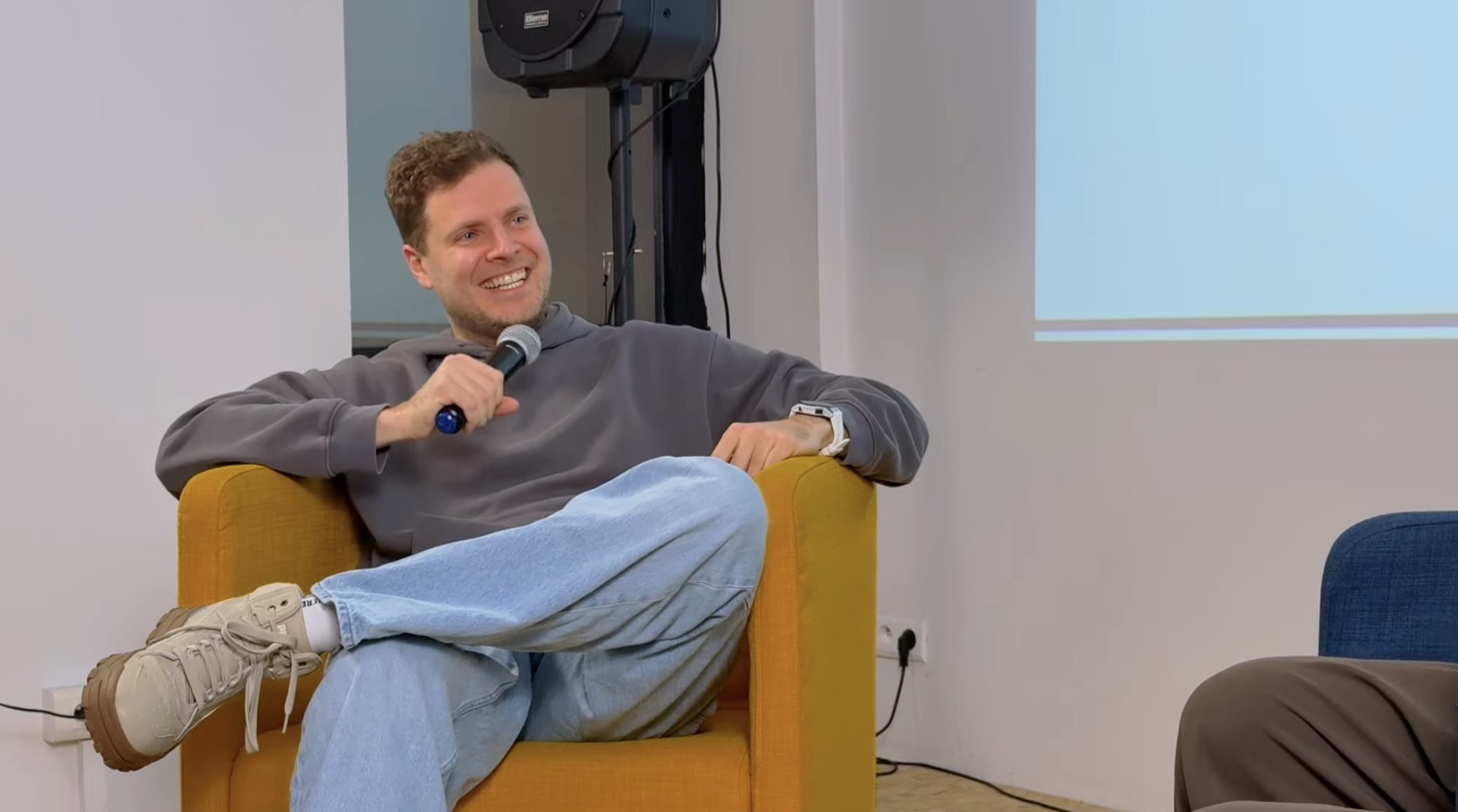
The SEO lens – Eugene Melnykov, Head of SEO, Topdog
Eugene’s takeaway from a two-year embedded engagement isn’t a checklist. It’s a diagnosis of why most SEO projects fail.
“Ninety-nine percent of SEOs fail not because their SEO is bad. They fail because they couldn’t make anyone understand why it mattered. If you sit on the sidelines, you get treated like the sidelines.”
What that meant in practice on FASS:

SEO sat in the architecture room, not the delivery room
Framework selection. Rendering strategy. URL structure. The choice of Next.js. The decision to consolidate a separate mobile site and a desktop site into one responsive platform. Every one of those decisions was made before a single SEO recommendation could have been written — which is exactly why SEO had to be in the room when they were made.
A dedicated SEO–tech bridge, not a translator
Eugene worked directly with four agile development teams across Sweden, Denmark, Poland and Finland. No product manager in between trying to approximate “canonical tag” or “server-side rendering.” When something needed correcting mid-sprint, it was corrected mid-sprint.
Stakeholder, not appendix
“From the moment they accepted the strategy, we earned the right to influence the technical environment. The framework. The infrastructure. The migration plan. That’s the difference between leading SEO and being assigned to it.”
Where the two lenses meet
Read Anna and Eugene back to back, and the same idea surfaces in two languages.
Anna says: don’t trust silence, hunt down the critical integrators, sit at the centre of the ecosystem. Eugene says: don’t trust the sidelines, embed in the technical decisions, be a stakeholder in the system you’re protecting.
Same posture. Different vocabulary. Both refuse to behave like the function they were hired into. Both insist on operating one level up — at the level of the product itself.
This is where most agencies actually live. Migrations, replatforming, content re-architectures, large-scale technical SEO — none of it is achievable from a brief. It requires sitting inside the engineering team, inside the management cadence, inside the decisions that shape the system. The agencies that admit this build differently. The ones that don’t get blamed when things they were never allowed to influence go wrong.
The numbers, briefly
The migration launched on 8 November 2025. The headline outcomes:
- Sweden’s top 100 pharmaceutical search queries — including Ozempic, Mounjaro, Wegovy, Naproxen and Lergigan — held average positions 1–3 post-migration.
- Organic visibility variance held under 10% in the first thirty days.
- Zero critical 404 errors in the first fourteen days.
- Crawl waste reduced by 99%. Googlebot now crawls the entire site in three to four days; previously it took over a month.
- Index footprint reduced by approximately 95%, consolidating millions of parameter-driven URLs into around 300,000 canonical product pages.
- Structured drug schema coverage moved from 0% to 100%.
The site is now structurally clean. Stable. Scalable. Boring, in the best sense of the word — which is exactly what national health infrastructure should be.
On the nomination
We’re proud of being shortlisted for the European Search Awards. Not because the project was a marketing triumph — it wasn’t designed to be. It was designed to make something irreplaceable continue to work for the people who depend on it.
If there is one thing we’d want the search industry to take from this nomination, it’s this: the highest-stakes SEO work doesn’t sit inside a marketing department. It sits at the intersection of management, technology and search. Most agencies already operate there. Saying so out loud is the first step to doing the work better.
About the author
Christian Rudolf is the founder of Topdog, a Stockholm-based SEO agency working at the intersection of search, technology and product. Topdog has led search and migration work for some of Sweden’s most demanding digital platforms, including FASS, Sweden’s national pharmaceutical information service.
Links
Website: topdog.nu
LinkedIn: linkedin.com/company/topdog-seo
Client: fass.se